













At the moment it feels as if the Earth and its inhabitants have been impregnated with a voracious anger. Politically, economically, socially, artistically, etc…There is no facet of the humanities left untouched by the suppressions of a modern confederacy. So, whilst the maggots (MAGA’s) are in an uproar about drag queens tucking fiercely and their hispanic neighbors; Deep in the confines of a lowly college student’s soul (aka. myself) lives an unbridled ferocity, so pungent that I do not think I have gone a day without annoyingly ranting to my friends over our mediocre university dining hall spoils.
During my first two semesters of college I was attending university as a fashion merchandising major. Kent State University has a remarkable fashion program, with an even more impressive focus on sustainability. Both mercha
ndising and design students are required to take a fashion sustainability lecture and lab within their first year. From the first fashion focused class I went to, sustainability was discussed. Because how could one talk about fashion without discussing the effects it places on the Earth ecologically?
Fashion is the number two most polluting industry in the world, only second to the oil and gas industrial complex.
The environmental atrocities my peers and I were taught left me blatantly awestruck. Subsequently, real-world fashion brands were made examples of in these lectures. Brands like H&M, Zara, Shein, and many more are offenders and the largest contributors of polluting and greenwashing fast fashion practices.
The term “fast fashion” refers to the mass-production of low-cost, non-durable clothing that can be worn a few times then disregarded and thrown away into a landfill. Large quantities of “donated” fast fashion clothes end up in mountains of clothes on third-world countries’ beaches. These countries, namely Ghana, are the victims of the willful ignorance of the privileged class. The circular economy.
is a farce. More than one hundred million items of used clothing drop from circulation and go to waste each year in Ghana’s capital alone. Abandoned by the trickle down from mass consumption of the retailer to the gluttonous consumer. The garments, so easily disregarded, end up in dunes of fabric buoyed 7 feet high along Ghana’s beaches.The fashion industry is deadly.
The apparel industry is on track to account for 50% of the globe’s emissions by 2030, and will be responsible for over 20% of global waste water.
Already a conscious consumer, I absorbed this information and readily regurgitated it to all my non-fashion cognizant friends and family. Personally, I exclusively purchase c
lothes second hand. Usually, from online resell sites like Depop, Ebay and TheRealReal.
Ever observant, annoyingly so, slowly I watched the fashion students filter in and out of the program as students found their calling. Though there is something else, a sharp contradiction that I have found in the fashion program itself and its students. Despite all of the rigorous sustainability education fed to the students by all professors, I have observed my peers wearing and proudly proclaiming their fast fashion consumption. Recently, in my fashion media class, there was a discussion post assigned with the prompt to, “Name and describe the fashion brands that you repeatedly buy from and why you keep returning to them.” The replies under the post were baffling to me. Many of my peers name infamous fast fashion brands: Hollister, H&M, American Eagle and Brandy Melville. All brands notorious for their harmful greenwashing practices and unethical working conditions.
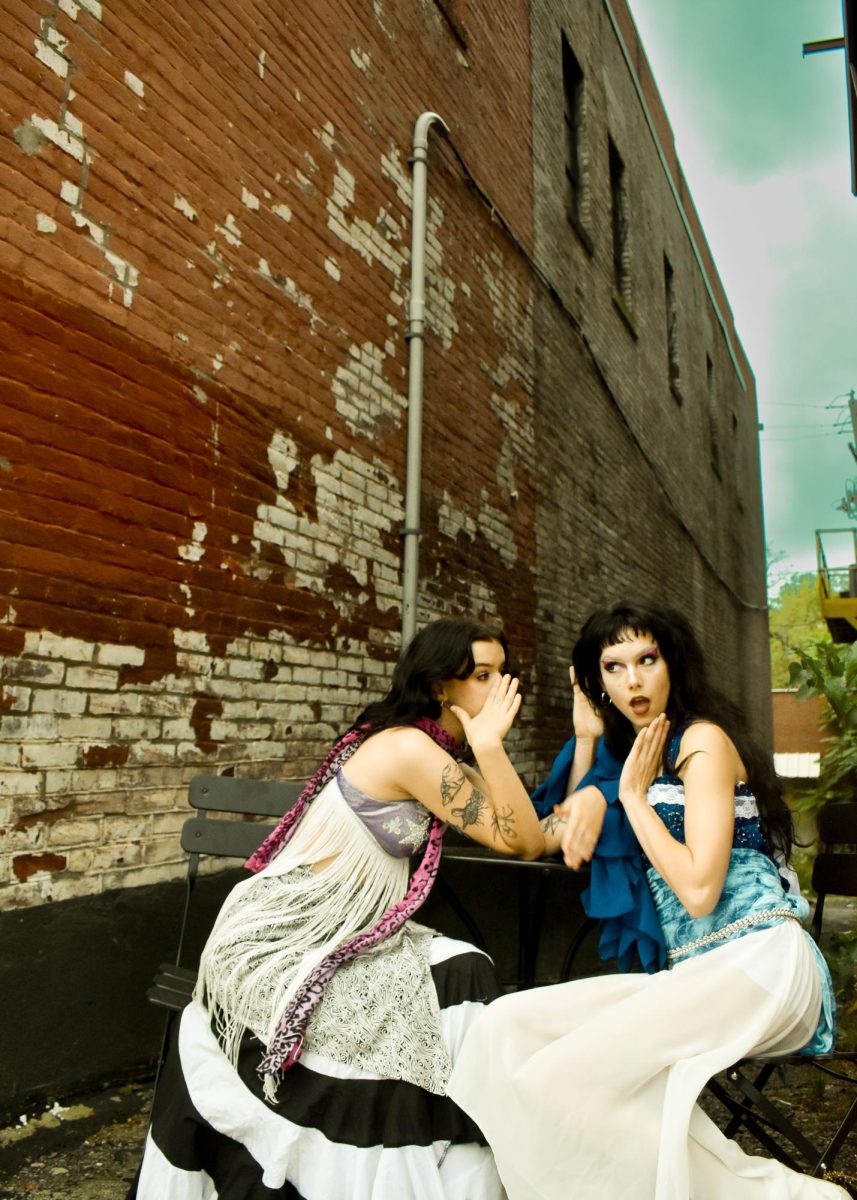
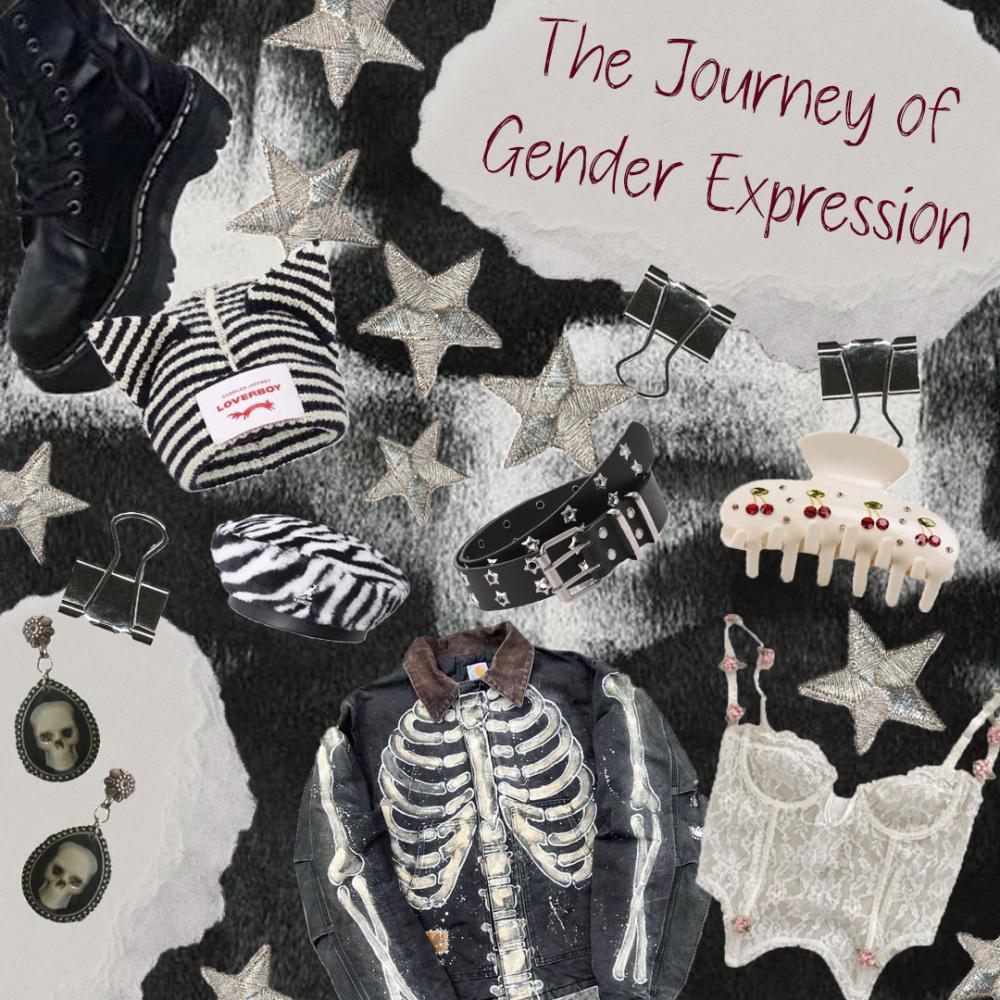
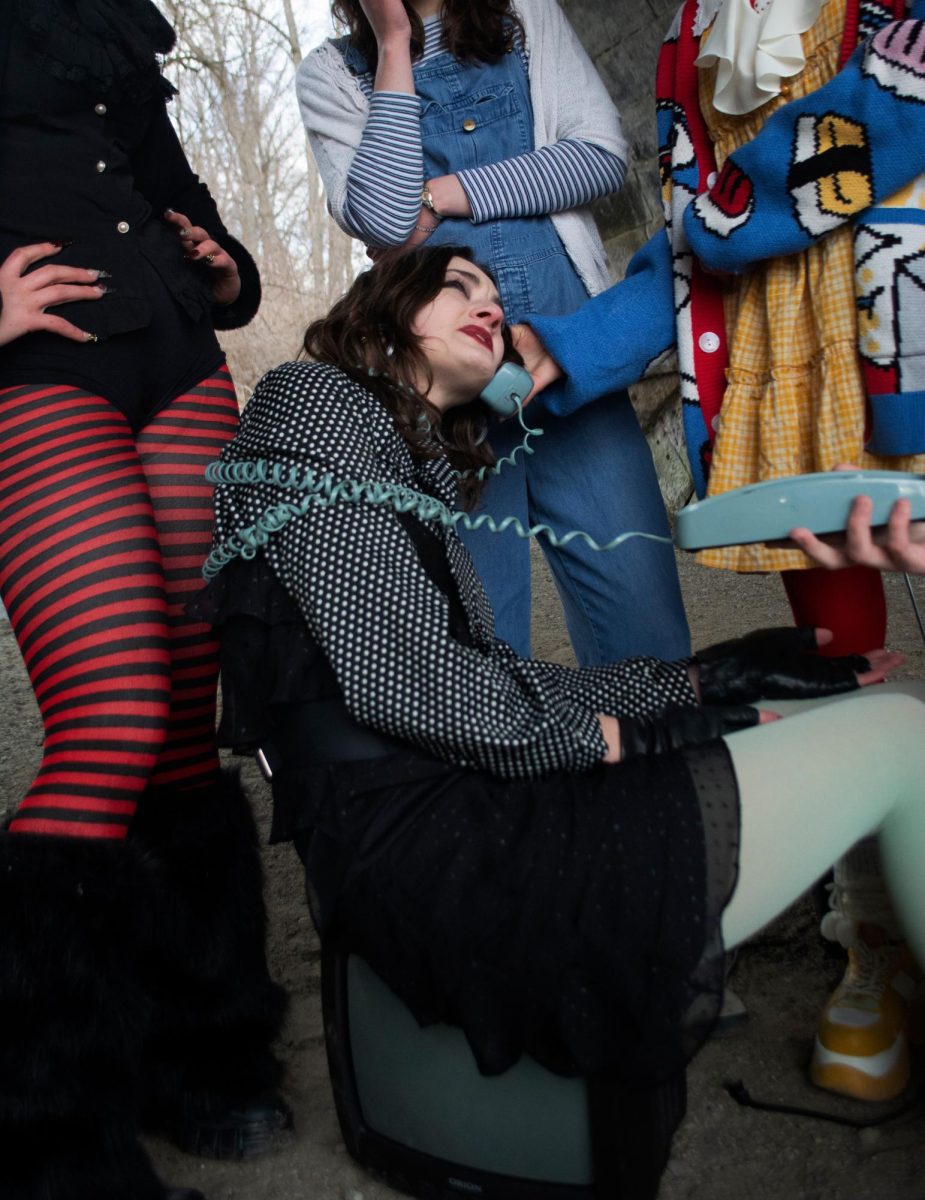
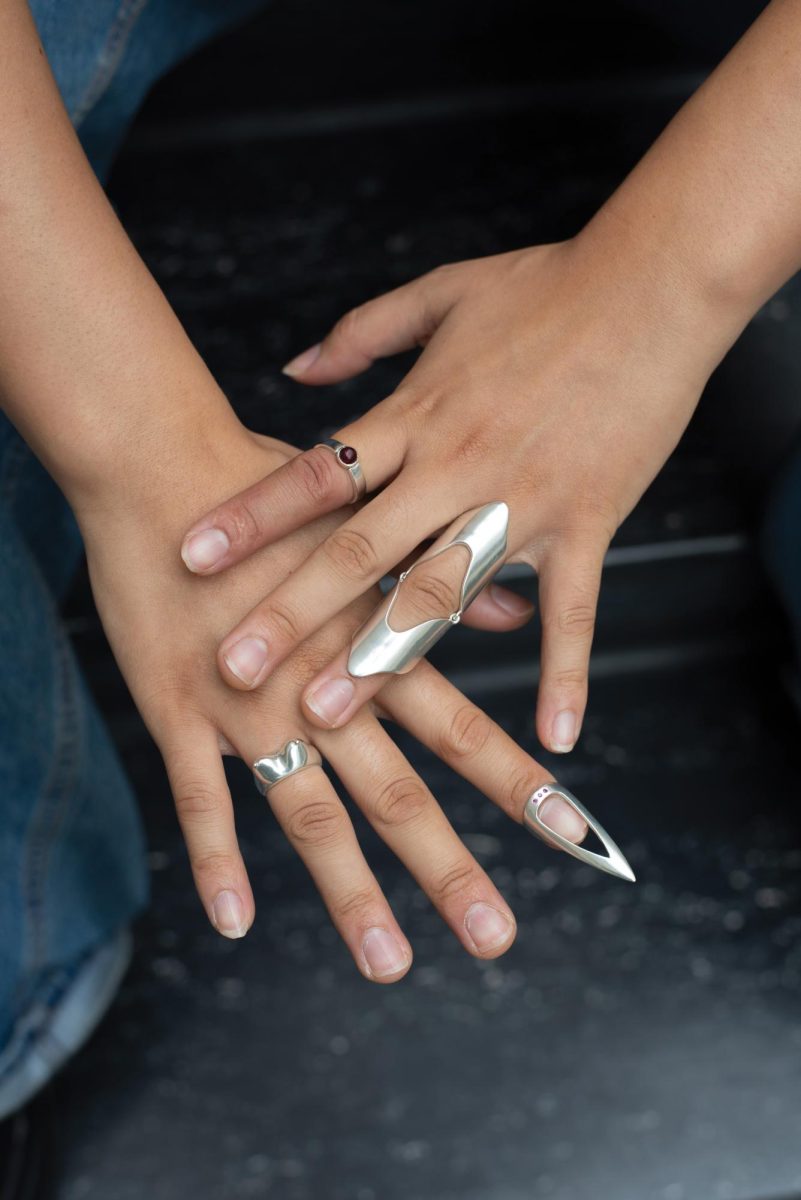
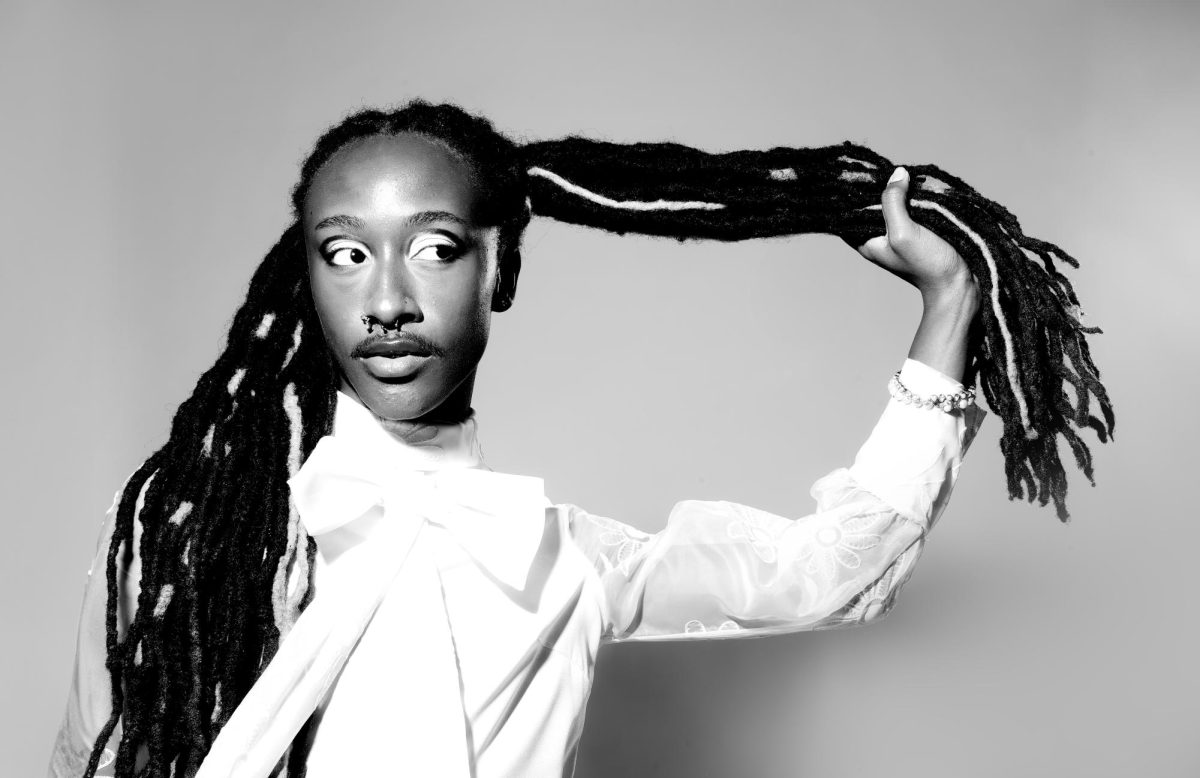
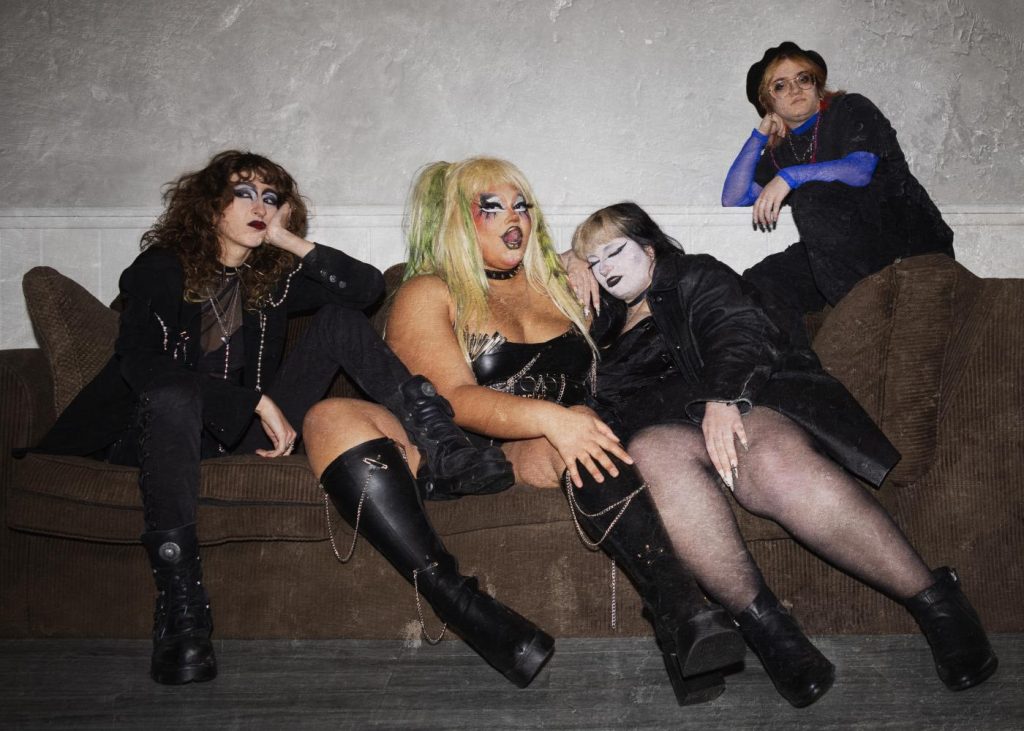
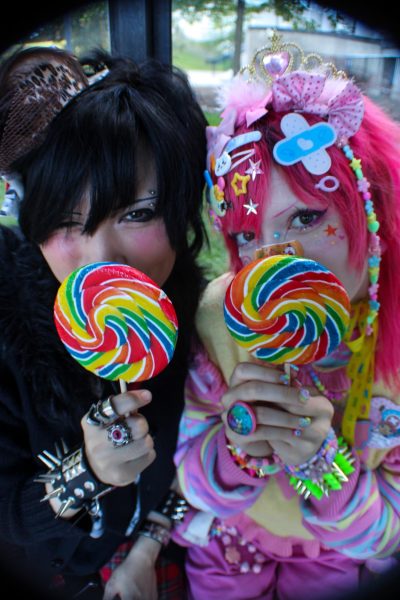
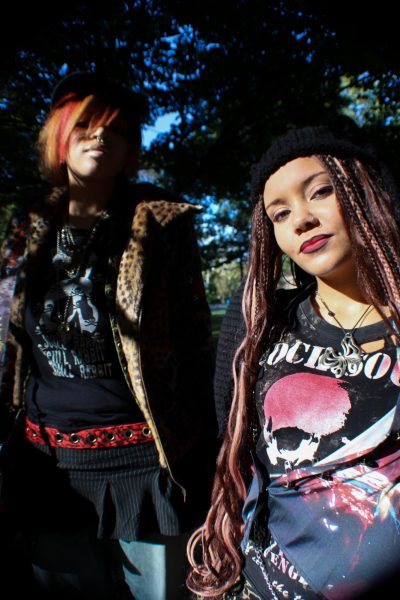
In contradiction, queer people choose a more camp route to curate their wardrobe. Supporting local business and performers is a massive part of queer culture. In the Kent area there are a lot of flea markets almost every Sunday along with a farmer’s market downtown in Acorn Alley. On Oct. 18, 2025, there was a “Here and Queer” market celebrating small LGBTQ+ businesses. This is just one example, though there are many more. Queer people, especially those in Gen Z, tend to follow a more “Queer Maximalistics” look; they use bold, anti-minimalist expressions, usually collected from thrift stores, small businesses or by upcycling. Queer people tend to veer towards quality over quantity in garments and accessories, going against the commercialized grain of the fashion industry.
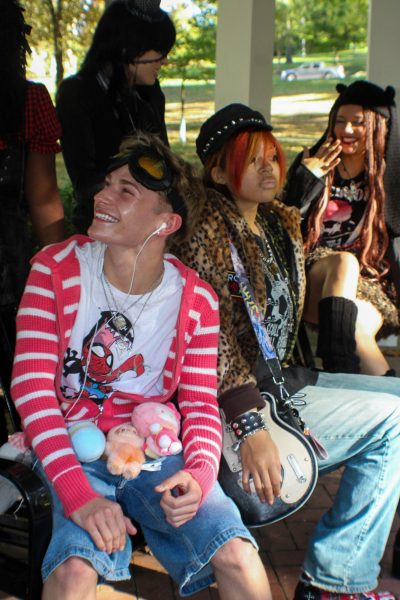
Another revelation I made was disgustingly heterosexual, meaning most of those students subscribing to fast fashion brands are hetero leaning. Coincidentally, they appear to be the only students that are advertised on the Kent State School of Fashion Instagram. Whilst there is a smaller amount, the queer fashion students absolutely carry the Fashion program, and art itself, on their boot straps. For example, a video from the Instagram account @ksu_fitzz includes a “fit check” of what students in the Kent State School of Fashion are wearing. In the video multiple of the volunteers are said to be wearing Shein, Free People, and Brandy Melville, directly juxtaposing the teachings and ethics of the fashion education being taught at this university. As opposed to local queer artists, such as drag queens and fashion designers, that really hone their craft and responsibly resource their fashions. Such as Caberetta, a fabulous local drag queen werking the circuit, and creating her own couture for the performances.
In a recent interview, I questioned the owner of the @ksu_fitzz account, junior fashion merchandising student Mariana Quinones Gaucin, a senior fashion merchandising major at KSU, to get a view on the other side of the coin. When I questioned her opinion on student sustainability, especially those shown in her videos she said, “I don’t think there is a lack of su
stainability practices among students. From what I’ve seen when interviewing people in the design space or doing fit checks on campus, most students include sustainability in some way”.
Quinones added, “Some students have conflicting beliefs because the way the fashion world functions can clash with sustainable practices we talk about in class.” The fashion industry is largely contradictory as seen in the greenwashing practices of brands like H&M where in their release of their Conscious Collection, they alleged to recycle their garments, though it is only a small percentage of their overall garment production. The contradictions seem repetitive, similarly with
 the ever popular online influencers and the compromisation of one’s ethics. I tried my hand at asking Quin about her view on the overt highlighting of heterosexual students over queer students. She stated in her response, “With the political climate and the censorship going on within the school and the implementation of different policies within the school running rampant, my page showcases a side that is fre
e from any kind of discrimination or censorship. In that way as I have previously posted about political issues like the ICE issues and posting about Palestine on my platform and queer issues without any concern of backlash from the school of fashion due to being an independent source”.
While, I do agree with and support any independent organization that is willing to go against the grain and su
pport marginalized people, especially in today’s climate. It is present that in this era of turmoil and wanton squandering of queer and minority viewership (aka. DEI), rebellion must be loud.
Queer people, like myself and dearest friends, face exclusion by our cis-straight peers, leading us to seek a non-conformant route through which we can access our passion (for fashion). My challenge to these fashion students. Institutions, and social media moguls alike, are to be balls to the wall in professing one’s values.
“Realise the political power of your money and spend it with the brands you know are treating their workers and the environment in the best possible way” – Lily Cole, Model and entrepreneur.