










For all it prides itself on breaking the mold and living outside cisheterosexual norms, the LGBTQ+ community is known for its love (and sometimes obsession) of labels. Labels are not all bad, as they can give a sense of belonging to people so in need of that very thing. The lesbian community in particular has a wide variety of labels, especially for people who lean more masculine. In recent history, the word “butch” has been used to refer to masculine lesbians, and “stud” more specifically for Black masculine lesbians. Even more recently, the general term “masc” has risen as an umbrella term that all masculine lesbians can use.
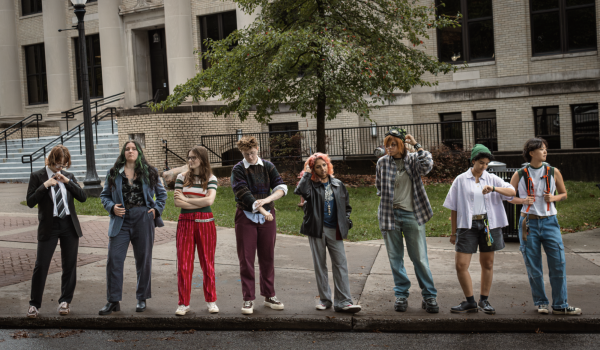
Despite the allure of an umbrella term that unites the community, the rise of the “masc lesbian” is interesting to me in how it disregards so much of the history behind the terms butch and stud. Butch identity is subjective, and it carries more than just the expectation that you will dress more masculine. It is an internal identity as well as an external one. In the case of “stud,” it gave a label and the belonging that followed to Black lesbians who were, and in some situations still are, constantly shunned from white lesbian spaces. To forgo these internal identities and settle on the purely external “masc” feels both intentionally vague and shallow.
In addition to this, an idea has spread across the internet and beyond that there is a “shortage” of masc lesbians. This superficiality explains the idea that there would ever be a perceived shortage of mascs, because masculinity is a spectrum and each person looking for a potential partner has a specific type of masculinity they deem acceptable.
In preparation for this article, the Fusion Instagram account polled its audience to gauge the public perception of the masc shortage. 35% of those polled believed that the masc shortage was real, while 65% believed it was not.
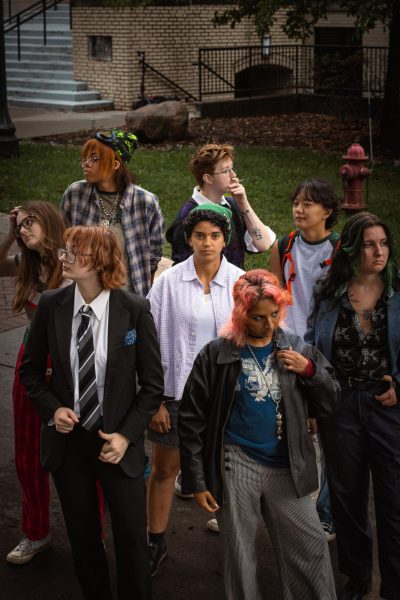
In an article from Them, Quispe López attempts to debunk the so-called masc shortage, saying, “Has there ever truly been a ‘masc shortage,’ or is that just a euphemistic shorthand for a lack of masc people who fit worryingly narrow, cisnormative ideals of whiteness, thinness, and androgyny?” According to López, a masc lesbian themself, the masc shortage arose in part from growing transphobia in the queer community. In the eyes of many in the online lesbian communities bemoaning the shortage, too many masc lesbians were transitioning and transfeminine butches were gaining more visibility.
Ashley Kramer, a sophomore studio art major, agrees with López. “There’s a lot of ignoring nonbinary lesbians in most spaces talking about the masc shortage.” As a nonbinary person who has been in a sapphic relationship, Kramer feels overlooked by the larger lesbian community. “I get that there are some nonbinary people that don’t use the term lesbian but that doesn’t mean that every nonbinary person should automatically be excluded. We’re here too.”
Spanning as far back as the 1880s with the poet Radclyffe Hall and through the 1940s with women working blue-collar jobs during World War II, gender nonconforming lesbians were a backbone of the community. To ignore these facets of lesbianism is both unfair to those mascs who are being overlooked and the vast history that comes along with being a lesbian in the first place.