







“There were times I questioned myself, not because I didn’t know who I was, but because the world around me constantly did.”
I’m bisexual.
That’s a simple sentence, but it rarely lands simply. I grew up in a conservative town where queerness wasn’t something you said out loud. Throughout my teenage years, as I began to realize my sexuality, it was hard to even imagine “coming out.” Deep down, I knew what I would face from my peers: gossip, judgement and questions that reduced me to a stereotype. Even with family, I worried my truth wouldn’t be met with support. So I stayed quiet.
When I did hint at being bisexual, reactions confirmed my fears. With men, it wasn’t curiosity or acceptance. It was oversexualization. The moment the word “bisexual” left my lips, I was often asked the same thing: “Would you have a threesome?” My identity wasn’t seen as love or connection. It was treated as a performance for someone else’s fantasy.
That quiet invalidation and objectification has a name: biphobia.
Biphobia isn’t just about insults or stereotypes, though there are plenty of those (“greedy,” “confused,” “promiscuous”). Sometimes it’s being told you’re “confused,” or that you’ll “pick a side” eventually. Other times it’s simply not being believed at all.
For me, growing up knowing I was bisexual meant never truly feeling at home in straight spaces. At school, being open about my identity felt dangerous. At family gatherings, it felt unthinkable. I lived in a kind of half-truth, enough to get by, but never enough to be real.
It wasn’t until I got to college that things shifted. Away from the small-town eyes that always seemed to be watching, I was able to step more fully into my identity. For the first time, I didn’t feel like I had to explain myself or defend who I was. I found people who understood, who didn’t question or sexualize me, who made space for me as I am.
That’s when I felt most like myself.
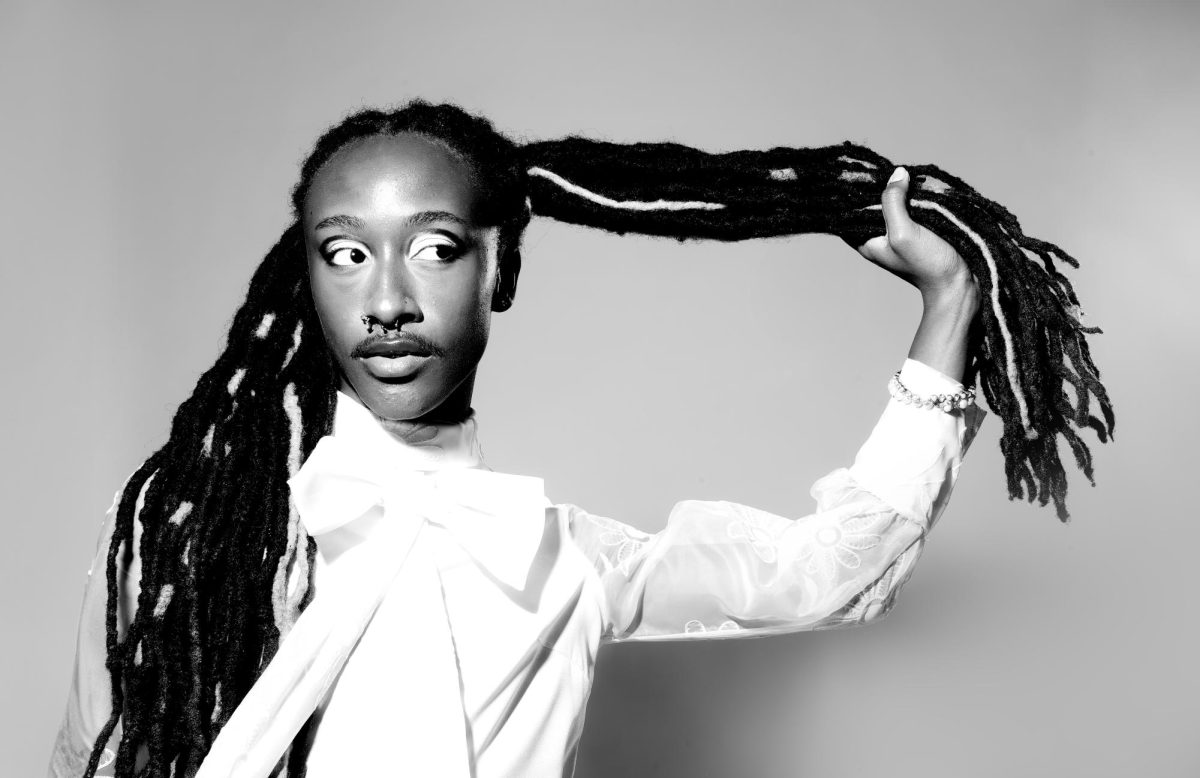
Others have had different journeys. Julianne Zerbini, a junior fashion merchandising major and bisexual woman, says she was lucky to grow up in a more open-minded environment, but still felt the pressure of being questioned.
“When I came out, I got a lot of ‘Are you sure?’ or ‘Is that just how you feel right now?’” she said. “It made me feel like I had to explain myself just to be believed. But I wouldn’t say it if I didn’t mean it.”
Presenting as a “typical straight woman,” Zerbini says she’s often spared the more obvious stereotypes, but that doesn’t mean her identity is any less real. “I don’t talk about it all the time, but it’s always there. Bisexuality, for me, is about connection more than gender, it’s the bond with someone that matters,” she said.
She believes the key to moving forward is awareness and honest conversation. “Talking about these experiences helps. The more real stories we share,” Zerbini says, “the more understanding there will be. Awareness leads to acceptance.”
“I wouldn’t say it if I didn’t mean it.
It shouldn’t matter who you date, if you’re happy and treated well, that’s what counts.”
— Julianne Zerbini
But biphobia doesn’t exist in a vacuum. Homophobia and transphobia are part of the same pattern of pushing LGBTQ+ people to the margins, of refusing to accept us as whole. The forms may look different, but the impact is shared. Each is painful in its own way. None is “better” or “worse.” They all stem from the same root: rigid ideas about gender and sexuality, and a refusal to accept people as they are.
Research has documented how these forms of prejudice take a toll, and I’ve felt that toll personally. There were times when I questioned myself, not because I didn’t know who I was, but because the world around me constantly did. The erasure, the casual dismissals, the subtle persistent invalidation, it adds up. It chips away at your confidence and mental health.
According to a study in Sexuality Research and Social Policy, bisexual people experience higher rates of depression and anxiety, often linked to identity erasure and internalized stigma. I know what that feels like because I’ve lived it, trying to navigate relationships, friendships and community spaces where my identity was either doubted or oversexualized.
PubMed reports that lesbian, gay and bisexual youth overall face a much higher suicide risk than heterosexual youth. Transgender adults report being denied health care, harassed, and even assaulted at alarming rates, according to the 2022 US Trans Survey. Many studies dating back to 2018 from a University of Richmond Law Review also note that bisexual people in particular often experience “double discrimination,” exclusion from both heterosexual and LGBTQ+ communities. These are different experiences that have the same outcome: living with a weight that shouldn’t be there.
When society dismisses any part of the LGBTQ+ spectrum, we all lose. Biphobia, homophobia, and transphobia may take different forms, but they reinforce each other by keeping queerness marginalized.
Health disparities are one example: whether it’s bisexual adults facing higher rates of chronic illness reported in the Human Rights Campaign, gay men battling stigma around HIV, or trans people struggling for gender-affirming care, the root issue is the same: discrimination embedded in systems.
Moving forward together, we need to listen when people share their identity without questioning or reducing it. Believe when queer people share their experiences and push for inclusive health care, policy and education that address specific community needs while recognizing our shared humanity.
For me, the most healing moments are simple ones: when my bisexuality isn’t seen as a joke, a phase or a fetish. It’s just part of who I am. And that’s what every LGBTQ+ person deserves to be seen, believed and respected.